The Netherlands and Sweden make their mark in Doha: “Hard work, talent and team spirit”
November 5, 2026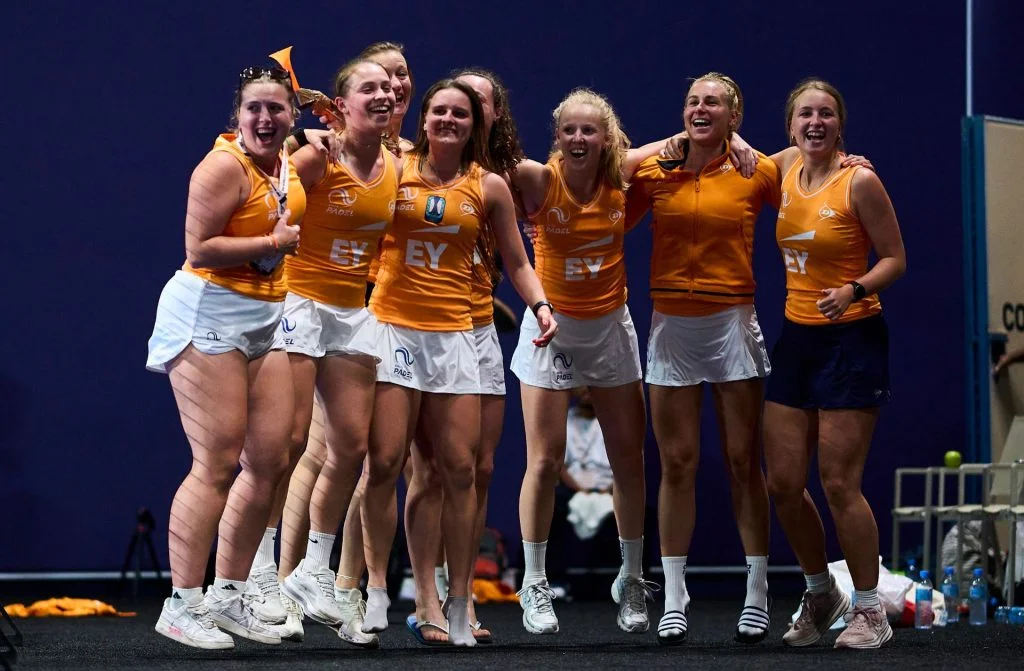
For the first time, both countries have reached the quarter-finals of the World Championships with their men’s and women’s teams. From the Netherlands’ 4,040 courts to Sweden’s 3,750, the figures tell the story of two thriving padel movements, turning growth at grassroots and junior level into international competitiveness.
DOHA – There are Spain and Argentina, Italy and Portugal, national teams accustomed to competing on the biggest international stages and winning medals. And then there are the Netherlands and Sweden, two countries that reflect just how global padel is becoming. At the FIP World Cup in Doha, the Oranje and the Scandinavians have achieved a historic milestone: both their men’s and women’s teams have reached the quarter-finals. A double qualification that is more than just a sporting achievement: it reflects growth on several levels – technical, physical and mental – as well as an increasing ability to build more competitive teams.
“This is a hugely important moment for us. We are still a small country, but this result is the reflection of all the hard work the players put in. I am really happy for them and very proud of my team”. Pablo Moreno, coach of the Netherlands men’s national team, sums up the significance of the qualification. For the Oranje, the achievement is particularly meaningful: two years ago, they finished the world championships in tenth place, while this year their campaign began in the qualifying rounds. An outstanding run that confirms the fourth place they had already secured at the 2025 FIP Euro Padel Cup, where they were once again among the surprise performers.
The growth of padel in the Netherlands and Sweden is also reflected in participation figures. According to the FIP World Padel Report, the Netherlands rank fifth worldwide for the number of Padel courts, with 4,040 facilities, behind Spain, Italy, Argentina and France. Sweden are close behind, with 3,750 courts. Both countries have developed an increasingly broad player base and are gradually turning that growth into sporting competitiveness.
“We have managed to build a really strong team that responds well to difficult situations. As a group, we are stronger than we would be if we looked only at the individual pairs”, Moreno adds. Team unity is also a recurring theme in the words of Milou Ettekoven, just 29 and already in charge of the Netherlands women’s national team: “At the moment, we really are a team. The players help each other and fight for one another. Even when they are not on court, they support and encourage their teammates. When you are a team, you can achieve great things.” The Dutch women had already finished fifth at the previous edition and will be looking to raise the bar once again this year, having topped their group ahead of Portugal.
EXPERIENCE AND NEXTGEN Sweden have also reached the quarter-finals with both their teams, a target the two squads pursued with confidence. “There was no particular moment when we suddenly realised that we could achieve this: we believed in it from the very beginning. So we are happier and prouder to have reached our goal than surprised by the result”, says Emmie Ekdahl, coach of the women’s national team. For Sweden, development also stems from the work being done with young players. At the 2025 FIP Junior World Cup, both the boys’ and girls’ teams finished sixth, while last July, at the FIP Junior Euro Padel Cup, the girls’ team won the bronze medal. That progress is directly reflected in the senior team competing in Doha: three players in the Swedish women’s squad – Juni Sjöland, Silje Kjaergaard and Zoe Andersson – were among the key contributors to the European junior podium finish.
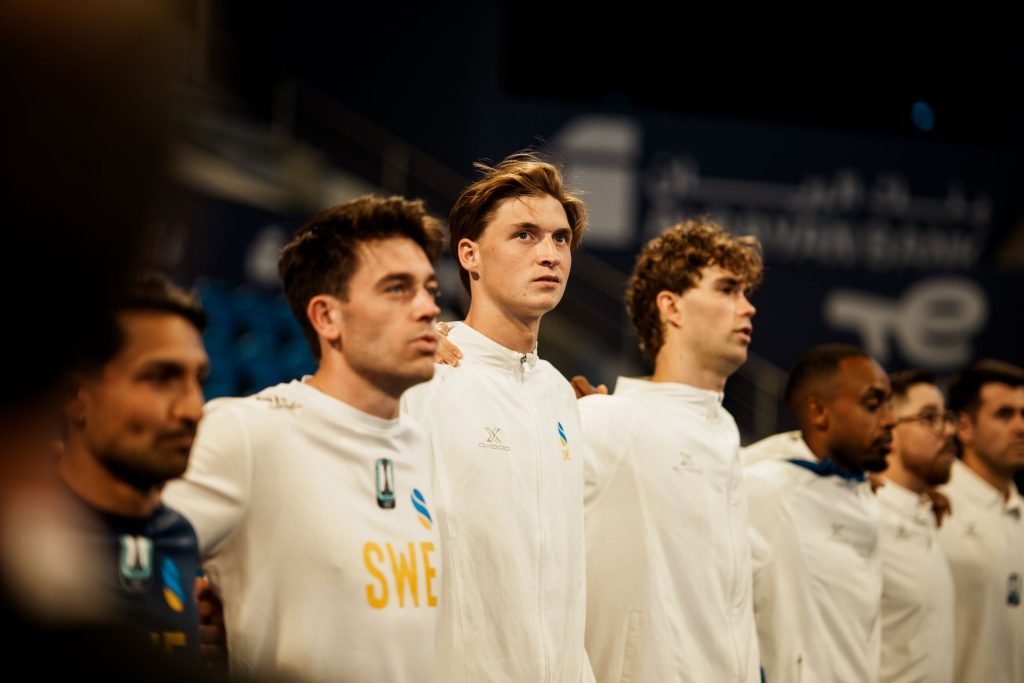
The generational transition also applies to the men’s team. “One of the most important developments over the past two years has been the progress made by our young players. They have gained experience, maturity and confidence, and are taking on an increasingly important role within the team. They are showing that they are ready to take over from historic figures in Swedish padel such as Daniel Windahl and Simon Vasquez”, explains David Howe, coach of the men’s national team. Their development is also driven by the opportunity to compete against increasingly high-level opponents: “More and more Swedish players are competing regularly at international level, gaining experience and becoming more competitive. This exposure is essential to their development as athletes”.
Different paths and different characteristics, but one element in common: the ability to turn the growth of their respective padel movements into tangible results and establish themselves as contenders on the biggest international stages.